




This report is edited and abridged from an AP press release, issued Wednesday 14 October 2026
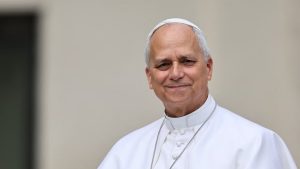
ROME (AP) — Pope Leo XIV underwent surgery Tuesday that confirmed he has lung cancer and doctors removed the lower lobe of his right lung, the Vatican said.
Tests confirmed a diagnosis of lung adenocarcinoma, the Vatican said in a medical bulletin after the surgery. It said the diagnosis had been suspected by preoperative tests and was confirmed during surgery.
The statement made no mention of treatment going forward, and the Vatican said doctors were not currently speaking of chemotherapy or other therapies pending the results of other tests.
If the cancer has spread, more tests will be needed to determine what kind of therapy to pursue, he said. Options include chemotherapy, a combination of chemotherapy and immunotherapy or targeted therapy, which involves oral pills for specific cancers.
The Vatican says the surgery was successful
The right lung has three sections or lobes while the left has two. After one lobe is removed, the remainder of the lung can gradually compensate, especially in otherwise healthy and physically active people.
In a statement, the Vatican statement said: “The surgery was successful, and there were no complications.”
Oncologists said prior to the operation that even if the nodule turned out to be cancerous, Leo’s prognosis would be “excellent” since it would have been removed at an early stage.
The following section is shared from the website of our UK colleagues at Roy Castle Lung Cancer Foundation:
Everyone at Roy Castle Lung Cancer Foundation sends their best wishes to His Holiness Pope Leo XIV, who has undergone surgery having been diagnosed with early-stage lung cancer.
Our charity exists to support people and families whose lives are touched by this disease. We understand the concerns and uncertainty that can accompany a diagnosis. We wish His Holiness strength, comfort and a successful recovery in the weeks ahead.
This news also reinforces a message we work tirelessly to share. Anyone with lungs can get lung cancer, no matter who, no matter what age, no matter what their lifestyle. Greater awareness and earlier diagnosis can make a real difference to outcomes.
Pope Leo XIV has been diagnosed with lung adenocarcinoma following surgery to remove the lower lobe of his right lung.
The 71-year-old pontiff underwent surgery at Rome’s Gemelli Hospital on Tuesday 13 October, after a suspicious lung nodule was identified during medical examinations. Tests carried out during the operation confirmed the diagnosis. Reports indicated that the surgery was successful, with no complications.
The Pope is recovering in hospital, with further information about his condition and any additional treatment expected as doctors assess the results of further tests. His cancer stage and whether it has spread to nearby lymph nodes have not been confirmed in the reports available at this time (14th October 2026).
But what is lung adenocarcinoma, and how does it differ from other types of lung cancer?
What is lung adenocarcinoma?
Adenocarcinoma is the most common type of lung cancer. It develops in glandular cells in the lungs, including cells that produce mucus, and is usually found in the outer areas of the lung.
Adenocarcinoma is a type of non-small cell lung cancer (NSCLC). Lung cancer is broadly divided into two main groups: non-small cell lung cancer and small cell lung cancer. NSCLC is the most common group, accounting for around 85% of lung cancer cases.
The three main types of NSCLC are:
- Adenocarcinoma: Develops in glandular cells and is commonly found in the outer areas of the lung.
- Squamous cell carcinoma: Develops in the flat cells lining the airways and is often associated with smoking.
- Large cell carcinoma: A less common type that can develop in different parts of the lung and may grow and spread quickly.
Although adenocarcinoma is associated with smoking, it is also the most common type of lung cancer diagnosed in people who have never smoked. This highlights the importance of recognising that lung cancer can affect anyone, regardless of their smoking history.
Find out more about the different types of lung cancer.
How is lung adenocarcinoma treated?
Treatment depends on several factors, including the size and location of the tumour, whether the cancer has spread, the person’s overall health and, in some cases, specific genetic changes within the cancer cells.
Where lung cancer is diagnosed at an early stage and has not spread, surgery may offer the possibility of a cure. Other treatment options can include chemotherapy, radiotherapy, immunotherapy and targeted therapies, depending on the individual diagnosis.
Understanding the different types of lung cancer
A lung cancer diagnosis can raise many questions, and understanding the type of cancer is an important part of knowing what happens next. Different types of lung cancer can behave differently and may respond to different treatments.
At Roy Castle Lung Cancer Foundation, we provide trusted information to help people affected by lung cancer understand their diagnosis, explore treatment options and access support.
Find out more in our guide to types of lung cancer.
If you or someone close to you has been affected by lung cancer, you don’t have to face it alone. There is support available to you and your loved ones.
Frequently asked questions about lung adenocarcinoma
What type of lung cancer does Pope Leo XIV have?
Reports state that Pope Leo XIV has been diagnosed with lung adenocarcinoma, a type of non-small cell lung cancer.
Is adenocarcinoma a type of non-small cell lung cancer?
Yes. Adenocarcinoma is one of the main types of non-small cell lung cancer (NSCLC), alongside squamous cell carcinoma and large cell carcinoma.
Is lung adenocarcinoma an aggressive cancer?
Lung adenocarcinoma can behave differently from person to person. Its outlook depends on factors such as the stage at diagnosis, whether it has spread, the cancer’s characteristics and how it responds to treatment. Some cases grow slowly, while others can be more aggressive.
Can non-smokers develop lung adenocarcinoma?
Yes. Although smoking is a major risk factor for lung cancer, adenocarcinoma is also the most common type of lung cancer in people who have never smoked. Other factors, including exposure to radon, air pollution and certain workplace substances, can also contribute to lung cancer risk.
Can lung adenocarcinoma be cured?
In some cases, particularly when the cancer is diagnosed at an early stage and can be completely removed, treatment may offer the possibility of a cure. The likelihood of successful treatment depends on the individual diagnosis and other clinical factors.
What are the symptoms of lung adenocarcinoma?
Symptoms can include a persistent cough, coughing up blood, breathlessness, chest pain, unexplained weight loss and persistent tiredness. Some people have few or no symptoms in the early stages.
If you are concerned about possible symptoms, contact your GP. You do not need to smoke or have a history of smoking to develop lung cancer.
For more information, visit our guide to lung cancer symptoms.